A memoir in prose poetry, Hopkinsville represents the pinnacle of T. Crunk's skill as a poet, as well as a prose writer. An ode to a place and its people and their shared past, every page both moves and informs the reader. What Others Say About Hopkinsville
T. Crunk's masterful memoir, Hopkinsville, reads like sifting through a picture album of his life. Snapshots told in vivid detail with extraordinary vision, Crunk's lens—as through a child's perspective, noticing J C Penney's "three-way mirror in the clothes aisle [where you can] look at a thousand of yourself," the popcorn machine at Woolworth's, cigarettes discarded from car windows like mini-fireworks—makes the reader marvel at his memory. We are treated to lines of early poems that lead him to becoming the masterful storyteller he is. Crunk unearths visceral details of his life in a memoir filled with details that spring to life the reader will carry long after reading the last words of this extraordinary book. It is a story of place, of family, of secrets, and truths.
—B. Elizabeth Beck, author of Swan Songs Hopkinsville is not so much a personal memoir as it is an evocation of place during the author's childhood and ascent to adulthood, an excavation of memory to recreate a particular place that in some magical way becomes every small town. The author works through a lens, not a mirror. One can almost reconstruct the core of a community, building by building, event by event, whether it be a church social, a first meeting of long-lost siblings, or the wonder of fireworks at the county fair. It is a walking tour to a time and place seen through the illuminating lens of a poet who renders lives in ways reminiscent of James Agee's classic Let Us Now Praise Famous Men, a portrait that is thoroughly alive and moving.
—Richard Taylor, author of Fathers
Stories are like rivulets and streams that flow into creeks and rivers, and into us. We are partly made of stories. T. Crunk's memoir, Hopkinsville, is a many-layered story of a family and a place, a poet's memories of childhood and adolescence told in prose poems. The form works well to present the clear, spare voice of the narrator, as if he is back in the time of the memory. He gives the real details ("the blue rose, blooming in Lila's teeth"—a tattoo on his father's leg) without much explanation or commentary, trusting the language and the reader to bring the story to life, while honoring the mysteries of family, those parts of the story withheld or hidden but essential. Crunk's style is spare, resonant, memorable, and this book is a lively meandering stream in our literary watershed.
—Greg Pape, author of A Field of First Things
Details and Ordering
Publication Date: June 15, 2025
Format: Softcover, 6" x 9"
ISBN: 978-1-961127-15-9
Price: $23.00
About the Author
Tony Crunk is a native of Hopkinsville, Kentucky. His first collection of poetry, Living in the Resurrection, was the 1994 selection in the Yale Series of Younger Poets. He has published several subsequent collections, including Biblia Pauperum (Accents Publishing), as well as a number of works in other genres, including fiction, drama, and children's books. He lives in St. Louis.



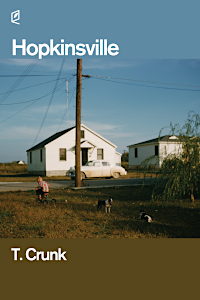 A memoir in prose poetry, Hopkinsville represents the pinnacle of T. Crunk's skill as a poet, as well as a prose writer. An ode to a place and its people and their shared past, every page both moves and informs the reader.