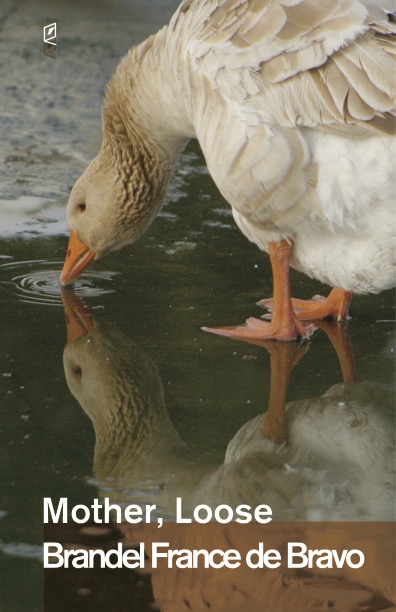
I like its cohesion—the combination of poems inspired Mother Goose rhymes with poems about the death of my mother.
What did you have to overcome to publish it?
The poems in Mother, Loose were part of a larger manuscript that ultimately did not cohere. I, consequently, decided to pare down the full-length manuscript and turn it into a chapbook. While it was hard to let go of so many poems, I saw that there were two kinds of poems that needed to be brought to the fore and that could complement one another. Once I made the decision to focus on “mother” in its two forms, I wrote additional poems toward that theme. Some of these newer poems ended up being distillations from essays I’d written.
What do you hope people learn/experience from the book?
I hope that Mother, Loose helps people see some of their most primal fears in a new light. Nursery rhymes, Mother Goose rhymes, and fairy tales help elucidate, normalize and lighten the burden of those fears, at times making light of them. Humor is a form of intelligence, and dark humor shows us how to live with death.
Favorite interaction with a fan or reader?
I think my favorite interaction with a reader was with a reviewer, the writer, Hannah Rodabaugh. She wrote a wonderful review of Mother, Loose in Pank that made me feel seen—as though my poems had truly landed.
What are you working on now?
My second full-length book, Locomotive Cathedral, came out last year (March 2025). It was selected in the Backwaters Press contest and published by Backwaters Press, an imprint of the University of Nebraska Press. It had been ten years since Mother, Loose, so I had a blast doing readings and am pleased with the book’s reception. Right now, I’m finalizing a new collection of poems titled Fade Away & Radiate, which address or write toward what Buddhists call “the five remembrances” (e.g. this body is of the nature to age; I cannot escape aging). I’m still adding and removing poems and working on the order but I expect to be sending it out by the spring of 2026.
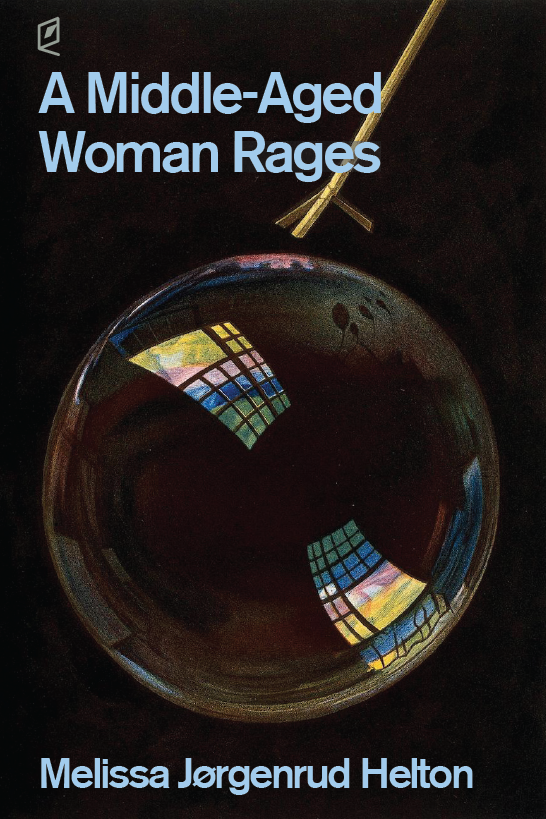
“A Middle-Aged Woman Rages will help readers to ponder rage as it shares memorable poems from one author’s persona in a uniquely qualified voice.” — Felicia Mitchell, Appalachian Journal
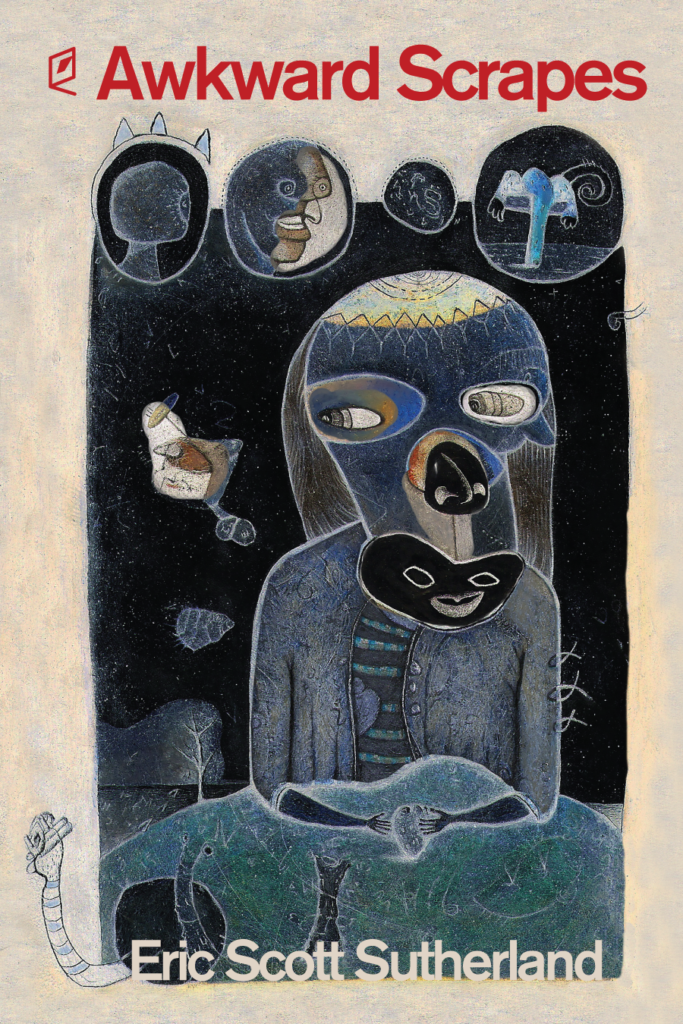
Accents Publishing is proud to bring to you a new poetry book by Eric Scott Sutherland!
Awkward Scrapes is a collection of poems that celebrates love, family, fatherhood, and the natural world while confronting grief, violence, memory, and healing. Rooted in Appalachia and Kentucky landscapes, Eric Scott Sutherland’s lyrical, music-infused poems seek beauty, tenderness, and hope amid the awkward scrapes of being human.
What Others Say About Awkward Scrapes
Awkward Scrapes is its own equinox. Distributing love evenly. Ascribing “sacred” status to domesticity, centering fatherhood, and appreciating the beauty in everything that lives between the coral and the trees … what higher, more honest work could a poet ever do? —Frank X Walker, Poet Laureate of Kentucky 2013–15
“The cycle of pain is forever—” but there are places “where tender things are named,” and in that naming—even in our current “unholy country”— Eric Scott Sutherland finds a commitment to annotating and preserving family, place, and the rhythms of the natural world. “I am fierce / in my defense / of home” the poet declares, and his defense is making for us the most memorable “lyrical tapestries.” Awkward Scrapes is an arresting poetry driven by the poet’s signature short-lines, favorite music, sonic play, spoken-word energy, and a dogged search for inspiration and joy. —Marianne Worthington, author of The Girl Singer
The poems in Awkward Scrapes are the best kinds of love songs, never sentimental and always powerful. They are meditations on romantic love, on the profound connections we have with our children and the natural world, even on life itself. This book is a celebration of all that makes us human: the awfulness and the beauty, sometimes tangled. Sutherland is one of my favorite poets and I loved every carefully chosen yet organic word. —Silas House, Poet Laureate of Kentucky 2023–25
To read a sample poem or to order the book, visit the book’s page on the Accents’ website.
Tell us the story of your Accents Publishing book, SIRENS AND RAIN.
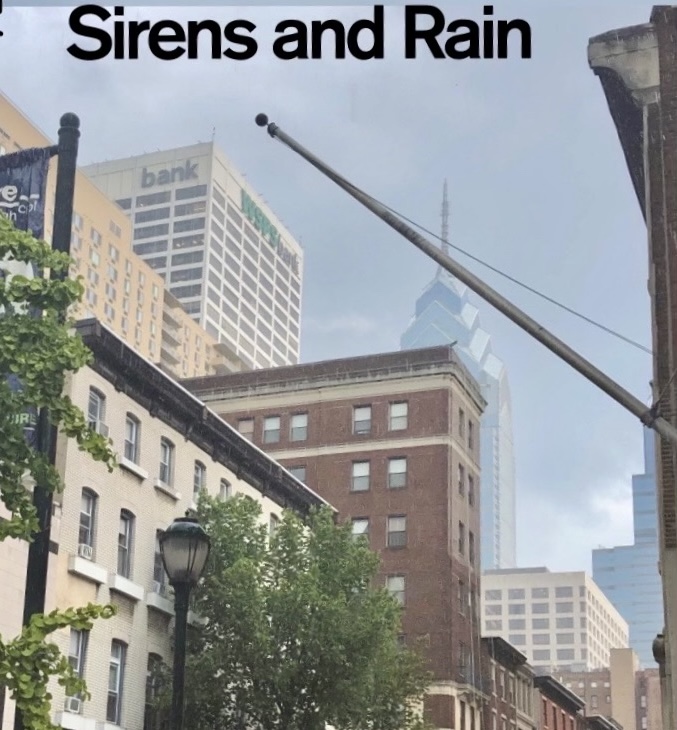
Sirens and Rain is a book of haiku and senryu (haiku-like poems focusing on human nature) about life in and around Philadelphia. People, animals, trees, fountains, statues, trains, life in all forms as it reveals itself in quintessential moments. With its unique variety of human and (other) natural phenomena, I have found this city to be an ideal place to write these “sketches from life.” The poems in this book came to me over a number of years—as I walked to work, taught my classes, rode my bicycle around the Schuylkill River, and otherwise encountered city life. (Note: the word “haiku” is both singular and plural; the same is true for “senryu.”)
What do you like most about it?
I like how the book is a history, in poetry, of what life was like for my wife, my cats, and me during the years we lived near the corner of 20th and Chestnut Streets. This is the intersection shown in the photograph I took for the cover. A few of the poems were written after we moved from there to another place just around the corner.
What did you have to overcome in order to finish and publish a book?
By the time I began working on the manuscript that became Sirens and Rain, I had plenty of haiku and senryu that could have conceivably been included. So the challenge was to select and arrange the best poems, or the best combination of poems, for the effect I wanted. Organizing by seasons helped; that way I could break the poems into five separate sequences (the four seasons plus a fifth chapter for late summer through early fall). In arranging the poems, I tried to juxtapose nature poems and people poems that played off one another in interesting ways. This entailed many rounds of revisions. You might say that the actual composing of the book was a matter of moving 3 X 5 cards around over and over again.
What do you hope people learn/receive/experience from reading your book?
As with haiku and senryu generally, I hope the poems in this book make readers more keenly, and in most cases more pleasurably, aware of what they encounter moment by moment in life. One of the best effects poems like these can have is to evoke for the reader a thought-feeling like, “Oh, I’ve had that experience—or seen that sight—a hundred times, but before never noticed it in all its beauty and wonder.” Or humor and charm, as the case might be.
What was your favorite interaction with a reader and/or a fan?
Because haiku and senryu can appeal so readily not only to poets and poetry enthusiasts but to folks who don’t often read poetry, I am always gratified when I learn that my brother-in-law, neighbor, landlord’s son, or high school Facebook friend “gets” and likes my poems. As for a specific interaction, I had an especially fulfilling one last fall when I visited a class that was reading Sirens and Rain as an assigned text for their Community College of Philadelphia literature course. Owing probably in no small part to how well their professor had guided their week-long study of my book, I found the students extremely engaged in and curious about writing haiku. They asked incisive questions. Then, in a kind of workshop format, I went around the room helping them with the short collections they were assigned to write. Almost to a person, perhaps TO a person, they were writing original haiku about subjects that mattered to them. As I left the classroom, literally, I felt a chill go down my spine. We had given a lot to one another.
What are you working on now? Catch us up one significant event in your life since the publication of SIRENS AND RAIN.
The most significant recent event in my writing life is that I just finished the manuscript that is the successor to Sirens and Rain. Entitled “Unofficial Portraits,” it consists of haiku and senryu that portray people by focusing on a moment or detail that is especially revealing about each person’s character. As with Sirens and Rain, the subjects span a range of settings, including work, education, neighbors, law and politics, sports, and family.
Is there anything you want to get off your chest about writing or publishing?
Why aren’t haiku about sports (other than baseball) more widely appreciated? Not a particularly pressing question but a pet peeve of mine?
Dear writers, readers, supporters, and friends of Accents Publishing,
We are happy to announce the results of our 2025 Open Reading Period.
The following books have been selected for publication during the remainder of 2026 and throughout 2027. We look forward to bringing each of these outstanding books into the world and to working closely with these talented authors.
Please join us in congratulating them.
We were humbled by the large number of high-quality manuscripts we received. The selection process took longer than expected, and we had to make a number of very difficult decisions, but we feel we selected the titles that most closely reflect where Accents Publishing hopes to grow and evolve over the next eighteen months.
We deeply appreciate everyone who submitted work to us. Thank you for trusting us with your writing, and we sincerely hope to have the opportunity to read your work again in the future.
With appreciation,
Katerina Stoykova and the team at Accents Publishing
The Double-Souled Son, a novel by Mary Louise Hill
Languages of Birds, a short story collection by Geraldine Ann Marshall The Water Collection, a short story collection by Bill Carman
True Bias, essays and sketches by Melita Schaum
Alert the Oracle, poetry by Tabitha Dial Alien Mother, poetry by Kristina Erny Animals, poetry by Rumen Pavlov Birds of Thunder, poetry by Jessica D. Thompson Catching a Ride in the Gizzard of a Bird, poetry by Sujata Lakhe Flotilla: A Family Memoir in Verse, poetry by Melissa Jørgenrud Helton From Field to Fable, poetry by Richard Taylor My Father, the Water Bird, poetry by Sean Corbin My Life as a Cricket, poetry by Linda Bryant Davis Neighborhood Watch, poetry by Bill Brymer Orchestra of Belonging, poetry by Marianne Peel Orfeito, poetry by Ricardo Nazario y Colón Places You Must Not Go, poetry by Flora K. Schildknecht Stare on Paper, poetry by Stuart Horodner Tendril, poetry by Amy Le Ann Richardson This Set Down / This, poetry by Libby Falk Jones Think. Pray. God, poetry by Wendy Jett Your Curious Guidebook to Climate Change, poetry by Vivian Faith Prescott
Poet Manny Grimaldi reads B Elizabeth Beck’s PAINTED DAYDREAMS (Accents Publishing, 2019).
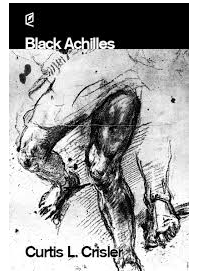
Tell us the story of your Accents Publishing book, BLACK ACHILLES. What do you like most about it?
What I adore most about Black Achilles is my collaboration with Katerina Stoykova and Accents Publishing editors and staff. Through collaboration, we achieved a poetic rendering of me severing my Achilles. By facilitating collaboration and community of the artwork, cover pages, and layout, we achieved one of my best-looking and formatted books I have to date.
What did you have to overcome in order to finish and publish the book?
Black Achilles came about when I tore my Achilles playing basketball for our university’s Homecoming Week. It was the Faculty vs. the Students. I was on the faculty. Everything went well through warmups. Then, when the game started, I ran up and down the court a couple of times before I heard what sounded like a gunshot. The body is an echo-chamber. I looked around to see if anyone else had heard it. No one did. Then, I tried to walk. My left foot flopped like a fish on dry land. One of my teammates’ husband observed me since he severed his. He told me that it was my Achilles by feeling the divot in my leg. I didn’t want to believe it, but I tore mine.
I would later have surgery—be in a cast, then shoe, then knee-cart to teach and be mobile. It was Christmastime. I laid on my back, left leg elevated on couch back, while my mother helped me convalesce. This book was about a man who felt he lost his demigod status for b-ball (alludes to Achilles). He fell to human—left with the troubles of inconvenience and frustration. The poems play in myth and realism—with each breath and rehabilitative step for mobility and functionality to rise back or at least return to a sliver of demigod. The collaboration to get the book to where it needed to be, along with rehabilitation, were two trains on two different tracks, near touching—one went east, the other west. To solve the equation for a black broken body—nebulous.
What do you hope people learn/receive/experience from reading your book?
I really enjoy the feedback I get from the book. Those who deal with body issues (disability and pain), functionality, along with identity, health, mental stability, and the two worlds that split you apart: past/future, now/then, and me/who, conflate themselves to a searching. Searching for who and what you will become from the ruins of the broken—the old body that has changed into a new body. You wonder if you will heal, or not. You think of those born with disabilities, those who become disabled, and those who never see either. Humanity stands alone. This was a reason for Kim Addonizio’s epigraph, “the wheelchairs hate the shoes,” from “The Way of the World.”
So, I played with the personification of inconvenience and frustration. I became Doc Octopus—Spider-Man’s nemesis—a Marvel villain. This came about because I wasn’t functional per usual after surgery. One time I got up off the couch and tried to walk, only to face-plant on the floor, on a comfortable rug. Below—a few excerpts of how inconvenience and frustration and Doc Octopus took over my life, my mind, and my psyche.
Overseer Inconvenience puts his arms around me. This hug weighs world-winds and begs like infidelity’s lip-
stick marks. He wants me to learn how to fall again. There’s no sophistication to hitting the ground. I do…
Or, how this barrage of doubt with the impending placement of inconvenience and frustration or Doc Octopus domesticated my mind, had me reeling in my rehabilitation. The good about it all, it gave me concepts on how to create and explore on the page. The above reveals itself in two more excerpts from Black Achilles, the first from “There’s This…”—
Scarred. There’s the little stalls, the reaching for the soap while on two new metal appendages. How basic science can hold you up. As Doctor Octavius you have one flat tire—one appendage disengaged—you can do nothing in your mania to stop Spidey. Scarred. The stress of another fail.
The second, as follows:
Date night Frustration and inconvenience crash “last call for alcohol,” as if someone cried out, “is there a doctor in the house?” As if they were both doctors. Frustration brings inconvenience home. You hear their rattling bodies going at it in the kitchen. You hear their angry love making cry out like stuck mad dogs. You hear them snore like grizzly things.
What was your favorite interaction with a reader and/or a fan? I guess the ultimate interaction would be with professors, lecturers, teachers, and poets/writers who enjoyed the book and used it in their curriculums or workshops. It’s there where questions arose about my poetics and creativity surrounding the book. It’s great to express how real-life situations can proliferate into a creative kaleidoscope of poetic endeavor. Also, to share the origin story of the book with those interested—priceless. It’s in that space where we can blossom. All interactions afterward are blessings!
What are you working on now? Catch us up on one significant event in your life since the publication of BLACK ACHILLES.
Currently, I am beginning my second term as Indiana’s Poet Laureate. It’s very fulfilling and arduous, simultaneously, but I enjoy bringing Hoosiers together via poetry. For the page, I am putting together a tentative manuscript called Imaginate. The word, “Imaginate,” came from an Eric B. & Rakim song called, “I Ain’t No Joke.” I’m trying to figure out if it will be a hybrid book, a poetry book, or a poetry book and a poetry chapbook. Still processing…
Is there anything you want to get off your chest about writing or publishing?
Writing is one of the best creative endeavors to address who and why we are us. We need more great writers. We need great publishers to publish great writers. We need more great humans too.
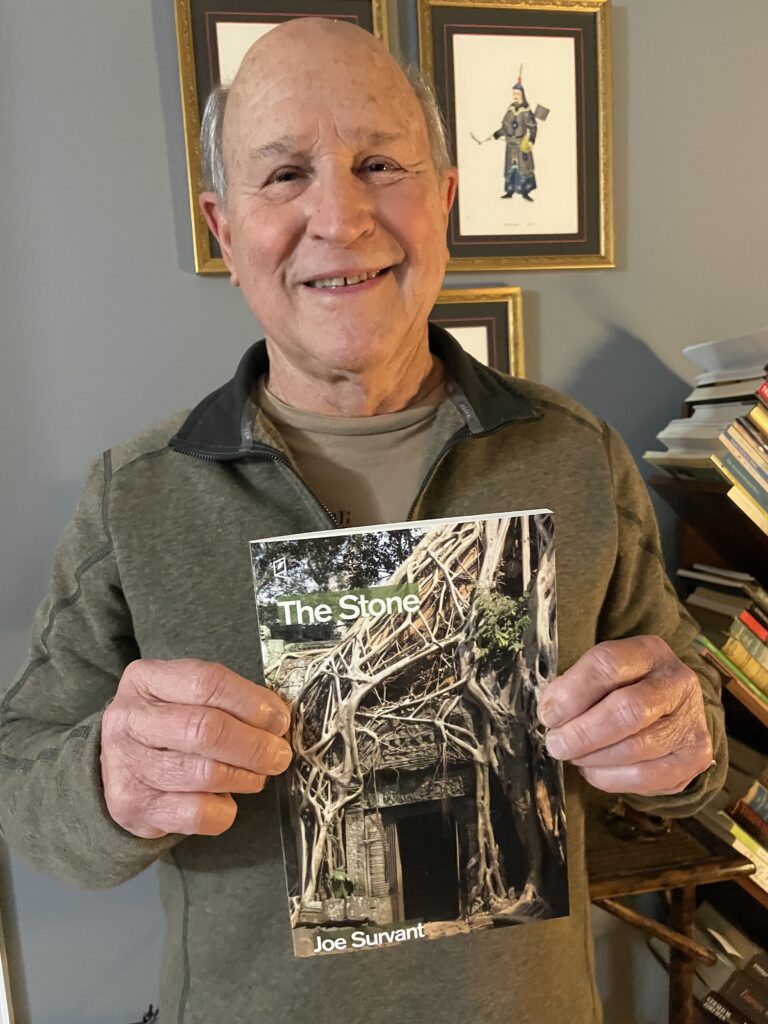
Fans and friends of the Accents podcast on WUKY, here is another episode. Joe Survant and Katerina Stoykova had a wonderful conversation about Joe’s latest book, his travel, his writing and more! Give it a listen!