Taking a workshop with Leatha Kendrick is a right of passage! Not only that, but also the news is begging to be written about.
Hope to see you to this two-hour workshop, brought to you by Accents Publishing and the Carnegie Center for Literacy & Learning!
The News from Poetry
It is difficult to get the news from poems yet men die miserably every day for lack of what is found there.
–William Carlos Williams “Asphodel that Greeny Flower”
Poetry is news that stays new, Ezra Pound said. What is it of our own lives that will stay new? How do we give voice to this moment in time? It is not so much the what as it is the how of our poems—the line and its mystery, our images and diction, the unexpected metaphor—that cause poems to remain fresh.
In this session, we will consider how poems convey both the timely and the timeless. Using prompts we will explore how we might craft poems that stay new, poems to surprise a future reader with a sense of our particular time.
Leatha Kendrick’s poetry, essays, and articles appear in journals and anthologies, including the Red Branch Review, Good River Review, Kansas City Review, Appalachian Journal, the Anthology of Appalachian Writers (Volume XVII); The Southern Poetry Anthology (Volume 3); and What Comes Down to Us – Twenty-Five Contemporary Kentucky Poets. In 2025, Kendrick was awarded the 10th annual Judy Gaines Young Award by Transylvania University, “recognizing exceptional works of Appalachian writers.” And Luckier, from Accents Publishing (2020), is her fifth collection of poems.
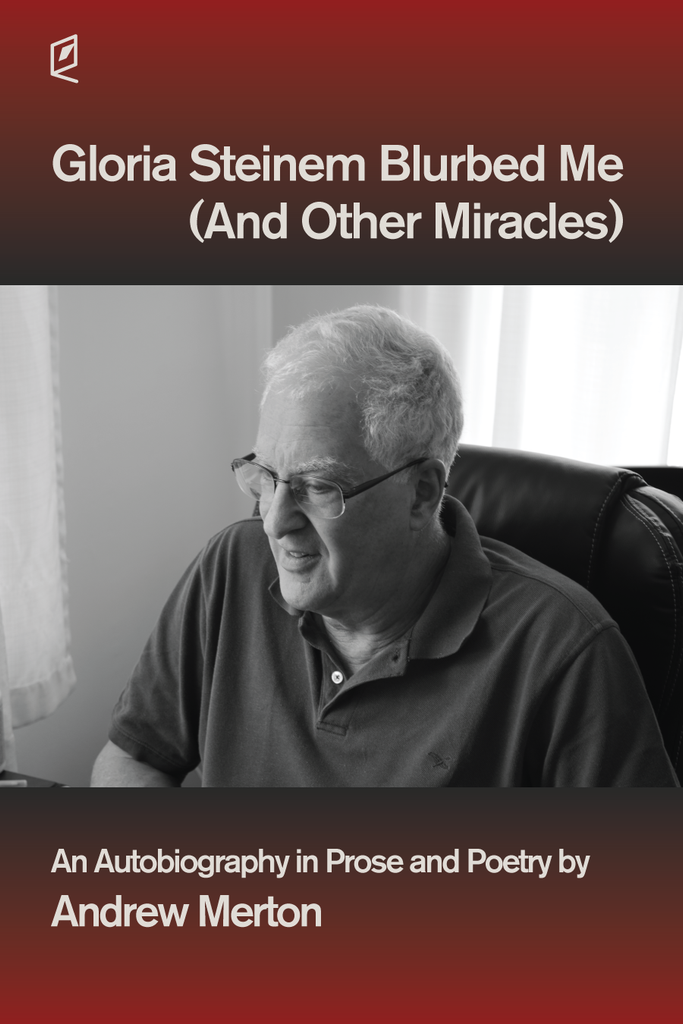
Tell us the story of your Accents Publishing book, UDDER UPROAR.
I love to write and do so almost every day since my first head injury back in 2000. In fact, my brain started to think in rhyme (not unusual for concussives, that is if they remember to think). When I decided to attempt to compile a collection and try to get it published, I knew I wanted it to appeal to the masses, poems people would actually read and enjoy. Since I seem to have a propensity to add irony, humor and sarcasm to my thoughts and writings, I decided to make a book filled with poems that filled this bill, although I’m slightly sad Udder Uproar is more of a chick magnet than a book that appeals to all sexes. But my mentors say, write what you know. Udder Uproar, my first and so far, only collection of poetry, is filled with waves of inane, love, loss and whatever else tides in my brain. All original poems by me without the help of AI (except for possible research answers), are ideas and observations written in my unique unstylish style, free form and untraditional. In 2022/2023 I attended Katerina Stoykova’s Poetry Boot Camp, 6 months of writing, revision and education. At the end we were supposed to do a manuscript exchange. Fortunate for me there was an uneven number of us to exchange with so Katerina decided she would read my collection. Katerina got back almost immediately with her desire to publish it. First, she said it was a full-length collection, but after many cuts, Udder Uproar was birthed as an in between chapbook and a tome of poems.
What do you like most about it?
The poems in Udder Uproar reflect my thoughts and observations, full of alliteration, assonance, nonsense, humor and rhyme. These poems are just snippets of the buds blooming daily inside my world. The cherry on top (cliché) is that Katerina Stoykova, Accents Publishing owner and founder, published it, meaning what I love the most about this collection is Katerina. Her bravery to go where few dare, publishing non-traditional people (or whatever you want to call people who don’t follow “the rules”), and subject matter shows me her generosity and open-mindedness.
What did you have to overcome in order to finish and publish a book?
Me. I am my own worst enemy. In the world of horses, I never doubted my ability to perform my duties at the highest level possible, within the industry’s confines. But, as a human around humans, I am filled with self-doubt, distrust of others, and the fear I am not good enough. When in the barn or a stall or on a horse’s back these concerns were non-existent. If I couldn’t fix a horse, I knew who to call to help me find the answers. If I couldn’t gallop one, I knew how to compromise with the animal, to work our differences out, or find a better suited rider. I have been unable to control my life with humans this way. I don’t know how to ask for help, who to trust, don’t understand why humans lie to humans. I am afraid of humanity.
What do you hope people learn/receive/experience from reading your book?
I hope when people read my poems they will laugh, smile, say, Me too, and discover I am the kind of writer who even though I try to hide loving emotions I am filled with love, gratitude and yes, even anger at some of the shit life throws my way. I hope my readers will see how it is possible to change the way we see things, so instead of stress, anxiety, depression, they know there is light shining somewhere, even if that somewhere is inside the cranium.
What was your favorite interaction with a reader and/or a fan?
I had one reader order 10 copies. They sent me a list of every person they were going to gift it to and asked me to write a limerick or a little ditty for each person. They put zero restrictions on language or content. It is an amazing feeling to think one is being accepted for who they are and to be trusted to be that person.
What are you working on now? Catch us up one significant event in your life since the publication of UDDER UPROAR.
Since the publication of Udder Uproar, 01/2024, I’ve been working on healing (I keep falling and breaking bones in my left leg), rebuilding strength, getting back to work, of which I am very passionate about because work allows me breathe freely (cliché) and lets me shove my fears to the back burner and wallow in mowing grass and being out in the open. When I write it is always from the inside looking out. I spent the winter of 2024 trying to compile another collection, but I kept running away from the stress, the extreme anxiety from reading poems I felt were less than anything anyone would want to read. I got bogged down in the constant revision after revision. I took longer and longer naps. I meditated more and more, until I was able to spend an entire day avoiding working on a book. Once again, I am working on my 2nd publication. I have many serious poems I would love to share with the world, but the competition is fierce, and since I love humor and words and ridiculous words, big words, words most people don’t even know exist or how to pronounce (me included) and then use those words in poems, I decided the alphabet and words might make a good book. These poems are the closest I’ve come to writing in a theme, and that is the next, boring (Lord, I hope not) collection I working on. I also write limericks, and like to write political limericks, too (and dirty ones) and maybe one day I’ll have enough for a collection.
Is there anything you want to get off your chest about writing or publishing?
You ask if there’s anything I want to get off my chest about writing and publishing and the first thing I think of is how hard writing for publication is, especially if someone writes for their own enjoyment, are relatively unknown in the publishing world, or are reclusive (as many writers are). It is hard to break through, to open doors to the unknown, to sell oneself (pitch and market) and to follow all sorts of protocol, and rules, and then to submit. Relying on talent and good work is not enough to sell well, to be noticed, to be read and read again. And now, when few people read actual books there’s the challenge of trying to be a virtual/viral sensation, meaning for poems to be read I believe a poet must be able to sell them by reading them to whoever and doing it on social media. And that means investing in quality sound recording equipment or going somewhere to record and then figure out where to place and sell them to the quick fix generation.
Publishing appears to be an expensive folly, almost Sisyphean, meaning the time and energy it takes to create, submit, rationalize putting yourself out there for rejection, dealing with rejection, marketing and selling books with the greatest gratification coming from getting it done.
I’ve been a fan and admirer of Brother Paul Quenon’s poetry, memoir and photography. I had the rare opportunity to interview him for the Accents podcast on WUKY and ask him questions! I hope you listen!
Hey Poets! You don’t want to miss this Accents Craft Original session with Jay McCoy! https://bit.ly/beyond_lineation Thurs, March 12, 6-8pm Online $40
In this workshop, participants will explore poetic devices beyond the lineation toolkit or completely outside of it. While we will focus on writing the prose poem, we will touch on haibun, monostich, concrete, and various types of erasure work as well. The workshop will conclude with timed prompts for participants to try out the discussed techniques with an opportunity to share.
Jay McCoy is the author of The Occupation (Accents Publishing). Born and raised in eastern Kentucky, he now lives in Lexington. Jay is the Director of the Kentucky Book Festival and an adjunct professor at EKU and BCTC teaching first year writing, creative writing, and Appalachian studies. He co-founded the Teen Howl Poetry Series and is co-host of the Kentucky Writers Roundtable on RadioLex.
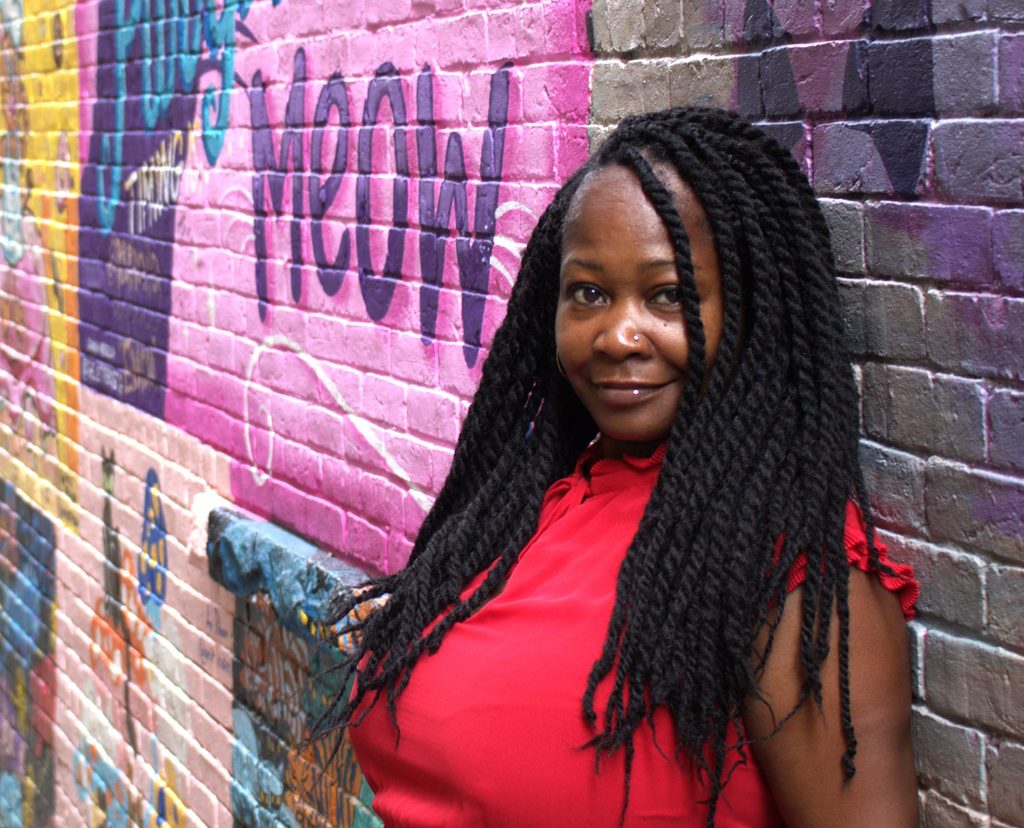
Tell us the story of your Accents Publishing book, WOE & AWE.
Katerina’s Poetry Bootcamps made me do it! I don’t know if it’s possible to develop writing skills without the constructive criticism and support of community; without Katerina’s mentorship, I’d still be looking up the meaning of fancy poetry terms like “enjambment” and “caesura” and “quatrain.” This is the story of Woe & Awe‘s unfolding—it’s voice and physical body in the world are a result of slow writing-muscle growth.
What do you like most about it?
I love how art, whatever its form, allows the-something-greater-of-life to be expressed through human beingness and is so often a balm for the ailing human spirit. When I’m struggling, making art for its own sake and spending time in nature, brings me home to myself. Woe & Awe is a raw and honest poetry memoir about hardship and healing. I really like that the work helps others to see their own stories of perseverance and the unrelenting green of hope. Yes, shit happens, but it’s not all that happens. And anyway, everyone knows that shit is fertilizer.
What did you have to overcome in order to finish and publish a book?
I overcame the inner critic, some poetry craft learning curves, and then several vulnerability hangovers after it was published.
What do you hope people learn/receive/experience from reading your book?
Here’s my sincere-corny-effective response to this question: I hope readers are encouraged to look at their own stories as interesting chapters so far—whatever the details—and realize that what comes next is yet to be written. Write it.
What was your favorite interaction with a reader and/or a fan?
I find the microphone intimidating and have felt supported throughout Kentucky, promoting the book. I had my first drunk-heckler last year and he yelled things like: “Yah! You tell it like it is, girl!” and “That’s what I’m talkin’ ’bout!”, and I hope this will happen to me at least once a year from now on.
What are you working on now? Catch us up one significant event in your life since the publication of WOE & AWE.
It was both the Accents Poetry Bootcamp 2023, and the Appalachian Writer’s Workshop 2023, that made me realize I want to formally learn what I don’t know that I don’t know about poetry, so I applied to the MFA program at Spalding in Louisville, and graduated in November 2025. My first book is full of Bootcamp and first semester work; my graduating thesis is a second poetry collection (still evolving). Through a grant from the Kentucky Foundation for Women, I facilitate art-making and poetry-writing in under-resourced communities of women in Kentucky; I‘mcertain that Woe & Awe and my MFA credential have helped open that door.