Results From Accents Publishing’s 2025 Open Reading Period

Dear writers, readers, supporters, and friends of Accents Publishing,

We are happy to announce the results of our 2025 Open Reading Period.

The following books have been selected for publication during the remainder of 2026 and throughout 2027. We look forward to bringing each of these outstanding books into the world and to working closely with these talented authors.

Please join us in congratulating them.

We were humbled by the large number of high-quality manuscripts we received. The selection process took longer than expected, and we had to make a number of very difficult decisions, but we feel we selected the titles that most closely reflect where Accents Publishing hopes to grow and evolve over the next eighteen months.

We deeply appreciate everyone who submitted work to us. Thank you for trusting us with your writing, and we sincerely hope to have the opportunity to read your work again in the future.

With appreciation,

Katerina Stoykova
and the team at Accents Publishing

The Double-Souled Son, a novel by Mary Louise Hill 

Languages of Birds, a short story collection by Geraldine Ann Marshall
The Water Collection, a short story collection by Bill Carman

True Bias, essays and sketches by Melita Schaum

Alert the Oracle, poetry by Tabitha Dial
Alien Mother, poetry by Kristina Erny
Animals, poetry by Rumen Pavlov
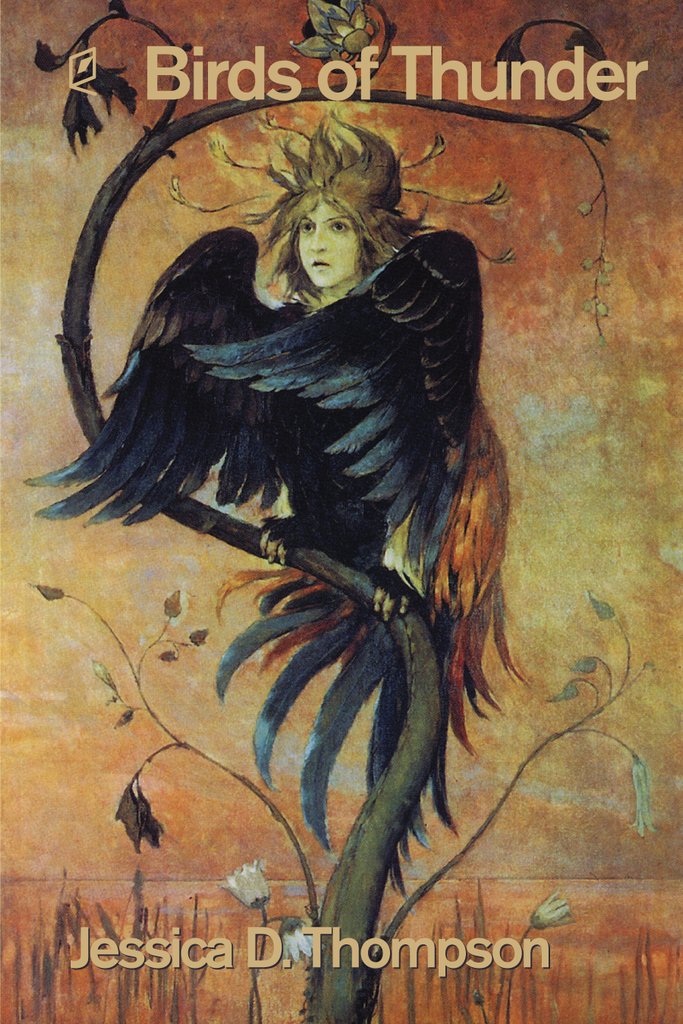
Birds of Thunder, poetry by Jessica D. Thompson
Catching a Ride in the Gizzard of a Bird, poetry by Sujata Lakhe
Flotilla: A Family Memoir in Verse, poetry by Melissa Jørgenrud Helton
From Field to Fable, poetry by Richard Taylor
My Father, the Water Bird, poetry by Sean Corbin
My Life as a Cricket, poetry by Linda Bryant Davis
Neighborhood Watch, poetry by Bill Brymer
Orchestra of Belonging, poetry by Marianne Peel
Orfeito, poetry by Ricardo Nazario y Colón
Places You Must Not Go, poetry by Flora K. Schildknecht
Stare on Paper, poetry by Stuart Horodner
Tendril, poetry by Amy Le Ann Richardson
This Set Down / This, poetry by Libby Falk Jones
Think. Pray. God, poetry by Wendy Jett
Your Curious Guidebook to Climate Change, poetry by Vivian Faith Prescott

Curtis Crisler and BLACK ACHILLES

Tell us the story of your Accents Publishing book, BLACK ACHILLES. What do you like most about it?

What I adore most about Black Achilles is my collaboration with Katerina Stoykova and Accents Publishing editors and staff. Through collaboration, we achieved a poetic rendering of me severing my Achilles. By facilitating collaboration and community of the artwork, cover pages, and layout, we achieved one of my best-looking and formatted books I have to date.

What did you have to overcome in order to finish and publish the book?

Black Achilles came about when I tore my Achilles playing basketball for our university’s
Homecoming Week. It was the Faculty vs. the Students. I was on the faculty. Everything went well through warmups. Then, when the game started, I ran up and down the court a couple of times before I heard what sounded like a gunshot. The body is an echo-chamber. I looked around to see if anyone else had heard it. No one did. Then, I tried to walk. My left foot flopped like a fish on dry land. One of my teammates’ husband observed me since he severed his. He told me that it was my Achilles by feeling the divot in my leg. I didn’t want to believe it, but I tore mine.

I would later have surgery—be in a cast, then shoe, then knee-cart to teach and be mobile. It was Christmastime. I laid on my back, left leg elevated on couch back, while my mother helped me convalesce. This book was about a man who felt he lost his demigod status for b-ball (alludes to Achilles). He fell to human—left with the troubles of inconvenience and frustration. The poems play in myth and realism—with each breath and rehabilitative step for mobility and functionality to rise back or at least return to a sliver of demigod. The collaboration to get the book to where it needed to be, along with rehabilitation, were two trains on two different tracks, near touching—one went east, the other west. To solve the equation for a black broken body—nebulous.

What do you hope people learn/receive/experience from reading your book?

I really enjoy the feedback I get from the book. Those who deal with body issues (disability and pain), functionality, along with identity, health, mental stability, and the two worlds that split you apart: past/future, now/then, and me/who, conflate themselves to a searching. Searching for who and what you will become from the ruins of the broken—the old body that has changed into a new body. You wonder if you will heal, or not. You think of those born with disabilities, those who become disabled, and those who never see either. Humanity stands alone. This was a reason for Kim Addonizio’s epigraph, “the wheelchairs hate the shoes,” from “The Way of the World.”

So, I played with the personification of inconvenience and frustration. I became Doc
Octopus—Spider-Man’s nemesis—a Marvel villain. This came about because I wasn’t functional per usual after surgery. One time I got up off the couch and tried to walk, only to face-plant on the floor, on a comfortable rug. Below—a few excerpts of how inconvenience and frustration and Doc Octopus took over my life, my mind, and my psyche.

Overseer
Inconvenience puts his arms around me. This hug
weighs world-winds and begs like infidelity’s lip-

stick marks. He wants me to learn how to fall again.
There’s no sophistication to hitting the ground. I do…

Or, how this barrage of doubt with the impending placement of inconvenience and frustration or Doc Octopus domesticated my mind, had me reeling in my rehabilitation. The good about it all, it gave me concepts on how to create and explore on the page. The above reveals itself in two more excerpts from Black Achilles, the first from “There’s This…”—

Scarred. There’s the little stalls, the reaching for
the soap while on two new metal appendages.
How basic science can hold you up. As Doctor
Octavius you have one flat tire—one appendage
disengaged—you can do nothing in your mania
to stop Spidey. Scarred. The stress of another fail.

The second, as follows:

Date night
Frustration and inconvenience crash “last call for alcohol,”
as if someone cried out, “is there a doctor in the house?”
As if they were both doctors. Frustration brings inconvenience
home. You hear their rattling bodies going at it in the kitchen.
You hear their angry love making cry out like stuck mad dogs.
You hear them snore like grizzly things.

What was your favorite interaction with a reader and/or a fan?
I guess the ultimate interaction would be with professors, lecturers, teachers, and poets/writers who enjoyed the book and used it in their curriculums or workshops. It’s there where questions arose about my poetics and creativity surrounding the book. It’s great to express how real-life situations can proliferate into a creative kaleidoscope of poetic endeavor. Also, to share the origin story of the book with those interested—priceless. It’s in that space where we can blossom. All interactions afterward are blessings!

What are you working on now? Catch us up on one significant event in your life since the publication of BLACK ACHILLES.

Currently, I am beginning my second term as Indiana’s Poet Laureate. It’s very fulfilling and arduous, simultaneously, but I enjoy bringing Hoosiers together via poetry. For the page, I am putting together a tentative manuscript called Imaginate. The word, “Imaginate,” came from an Eric B. & Rakim song called, “I Ain’t No Joke.” I’m trying to figure out if it will be a hybrid book, a poetry book, or a poetry book and a poetry chapbook. Still processing…

Is there anything you want to get off your chest about writing or publishing?

Writing is one of the best creative endeavors to address who and why we are us. We need more great writers. We need great publishers to publish great writers. We need more great humans too.

Christopher McCurry and THE GOSPEL OF GOD BOY

Headshot of Christopher McCurry

Tell us the story of your Accents Publishing book, THE GOSPEL OF GOD BOY.

It starts with being an older brother. What an awful and awesome responsibility that is. And I’ve got to be honest here, I really botched it up. I was mean, controlling, manipulative. I was a kid. I didn’t really understand how to be good. Eventually (and thankfully) I grew up and realized I had abused and misused my power. God Boy explores all that across themes of family, religion, myth. 

What do you like most about it?

I like that it’s bloody. I like that it’s kind of alarming. Oh. I like when I read it to myself, I feel something deep and ancient working within it.

What did you have to overcome in order to finish and publish a book?

Fear that my loved ones would be mad. Fear that it wouldn’t be as good as my first book. Fear that even though I’ve thought about all of this and wrote about it, maybe I haven’t changed all that much, after all. Maybe, just maybe, we are all evil and spiteful and tiny.

What do you hope people learn/receive/experience from reading your book?

I guess I felt, and have felt for sometime, the effects of time. I’m not really sure that it heals all wounds, but that it provides context and counterpoints–counter examples. It gives spaces for growth, if you are lucky enough to get a lot of it. Opportunities for reflection and collection, correction. So, yes, in humanity there’s violence. We kill each other. And since this isn’t a book about the consequences, it can be a book about why and how to be or become a person who loves others.

What was your favorite interaction with a reader and/or a fan?

Well, I’ve got to say I love when my wife reads my work or is sitting in the audience smiling at me. That gives me confidence and peace. Recently, someone reached out after reading God Boy and asked to get a copy of my first chapbook ever published, Splayed. That was nice of them! I don’t have any more copies, so I couldn’t help them out, but it was still fun that someone wanted to read more after finishing my book.

What are you working on now? Catch us up one significant event in your life since the publication of THE GOSPEL OF GOD BOY.

The next poetry book will be a book of love poems, for sure. And I’d love to share my short stories with the world. Finish a novel I’ve been working on for awhile. I’m working with a team of teachers to draft a Literary Arts curriculum for 6th-12th grade. My son Ecton is a full goose. Abra is a high schooler and in the Literary Arts program that I teach. And I’m leading the Bluegrass Disc Golf Association as the President for 2026. To name just a few of the things I’ve got cooking right now.

Is there anything you want to get off your chest about writing or publishing?

Imagine if every middle and high school had a Literary Arts teacher. How cool would that be? Most people don’t know this, but we need Literary Arts/Creative writing to be included in the legislation that governs Visual and Performing Arts. With that we could start developing a robust system of literary arts teachers to introduce the art of writing from a young age and help those who develop a passion for it to hone their skill and craft.

Photo of the front cover of the book, The Gospel of God Boy

Leatha Kendrick and AND LUCKIER

Headshot of Leatha Kendrick

Tell us the story of publishing AND LUCKIER.

For me, making a book is a slow process of distillation and experimentation. I had been working on a collection for a couple of years when Katerina suggested in 2019 that I submit something to Accents. So the inkling of a new book had been hovering. Katerina’s interest in looking at a collection of my poems opened the way for me to sharpen and focus what coalesced into And Luckier. Without her being there to receive this book, I might have gone on tinkering with the collection for another year. As a matter of fact, when I published Almanac of the Invisible in 2014, I already had begun to gather poems for the next book, and I had written the title poem. I revise individual poems over the course of many years. As I write new poems, my sense of each collection sharpens and refines itself. It is not an efficient process, but one I have come to love and to give myself over to.

What do you like most about it?

More than my earlier collections, And Luckier balances personal poetry with poems that engage world events. Though the poems were written before the pandemic, many of them still feel timely. Katerina’s books (her own poetry) inspire me to push boundaries, and her gentle presence as editor encouraged me to experiment. Another thing I loved about working with Katerina was that despite the fact the And Luckier came out in March, 2020, as the world was closing down, she stayed upbeat and inventive, making sure that the poems were heard widely on YouTube, the radio, and via Zoom.

What did you have to overcome to finish and publish a book?

By the time I published And Luckier I had a certain amount of faith in my own process. I had learned to believe that the book would find its shape and its place in the world eventually. However, I had to overcome the frustration of working through many drafts over several years and wanting it not to take so long between books. As I look back on those drafts now, I see that I was rushing the collection. Many of the best poems in the book were written in 2018-19. The 2017 version would have been a different book, and not as strong as the book Accents published.

What do you hope people learn/experience from reading your book?

I always hope to present readers with a range of poetic forms and a variety of ways to encounter experience, including humor and playfulness. I do not hold onto expectations for what any reader might learn from my poetry. Instead, I think in terms of giving readers a chance to be surprised or delighted or moved to look at something a little differently. These are the things I hope for when I read poetry.

What was your favorite interaction with a reader and/or fan?

Some readers have written to tell me they are grateful for my poem, “No Fear”—particularly for its realization that it’s “impossible to separate/misery and joy—the living edge of mystery.” That line, that understanding arrived with the poem itself. It was what the poem had come to teach me, and I will always be grateful for its arrival.

What are you working on now? Catch us up on one significant event in your life since the publication of AND LUCKIER.

I don’t really think of myself as a prolific writer, but I am always writing and nearly always imagining how new poems might fit together. Each time a book comes out, I will already have the start of another collection in process. I am usually working on two or three things at once. Right now I am in different stages of working on two poetry collections, as well as writing occasional essays and doing research for another project. In the past year I have had essays accepted for two anthologies, and the year before I published a long scholarly essay. 

In July, 2025, I signed a contract with Madville Publishing for a new collection, entitled Interior with Poplar. The first week January, 2026, we finished final edits. The book is slated for release in September, 2026. It is my fifth full-length collection of poems.

Front Cover of And Luckier